Coding 101 for Wellness Students: CPT, ICD-10, and Modifiers Demystified
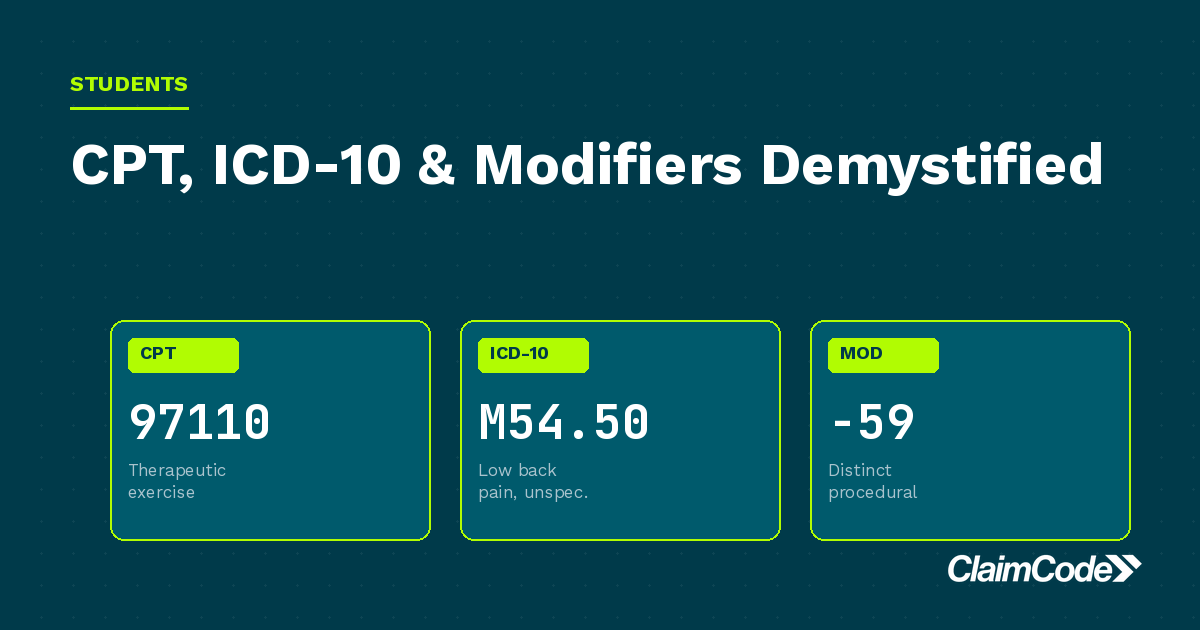
Master CPT codes, ICD-10-CM, and billing modifiers for chiropractic and physical therapy. A practical primer for wellness students and new billing staff.
As a physical therapy or chiropractic student, the world of billing codes can feel like a second language. Yet, mastering the basics of CPT®, ICD-10-CM, and modifiers not only smooths your transition into clinical internships but also builds a foundation for efficient, compliant practice.
1. CPT® Basics: The Language of Procedures
What is a CPT® code? Current Procedural Terminology (CPT®) codes are a uniform nomenclature for reporting medical services and procedures. Maintained by the American Medical Association, CPT codes streamline claims processing, ensure consistency, and support quality reporting.
Structure & Categories
- Length & Format: Each CPT® code is five characters long.
- Category I: Core procedural codes (e.g., 97110, 98940).
- Category II: Performance-tracking codes.
- Category III: Temporary tracking for new technology.
2. ICD-10-CM Essentials: Telling the Patient's Story
What is ICD-10-CM? The International Classification of Diseases, 10th Revision, Clinical Modification (ICD-10-CM) is used to code diagnoses across all healthcare settings.
Structure & Conventions
- Length: 3–7 characters, with a decimal after the third character.
- First Character: Always a letter (A–Z, except U).
- Characters 3–7: Alpha or numeric; a seventh character denotes encounter type in injury chapters.
3. Modifiers 101: Explaining Special Circumstances
What are modifiers? Modifiers are two-character alphanumeric tags appended to CPT® codes to indicate that a service or procedure has been altered by specific circumstances.
Top Modifiers for Wellness
- 25: Separately identifiable E/M service same day as another procedure.
- 59: Distinct procedural service when no more specific modifier applies.
- 76: Repeat procedure by same provider on same day.
4. Top Codes Table: PT & Chiropractic
| Discipline | CPT® Code | Description | ICD-10-CM Code | Description |
|---|---|---|---|---|
| Physical Therapy | 97110 | Therapeutic exercise, 15 min | M54.5 | Low back pain |
| Physical Therapy | 97112 | Neuromuscular re-education, 15 min | M17.11 | Unilateral primary osteoarthritis, right knee |
| Physical Therapy | 97140 | Manual therapy techniques | M25.561 | Pain in right knee |
| Chiropractic | 98940 | Chiropractic manipulation, 1–2 regions | M54.5 | Low back pain |
| Chiropractic | 99203 | New patient E/M, moderate complexity | M54.4 | Lumbago |
5. Putting It All Together: A 3-Step Workflow
- Select the CPT® Code: Choose the procedure code that best matches your clinical intervention.
- Pick the ICD-10-CM Code: Match it with the most specific diagnosis code supporting medical necessity.
- Add Modifiers if Needed: If you performed an E/M visit plus a manipulation on the same day, append modifier 25.
By mastering CPT® structure, ICD-10-CM conventions, and modifier rules now, you'll not only ace your clinical rotations but also lay the groundwork for a smooth billing workflow.
Related Reading
From Clinic Room to Claim Form—Mastering Documentation & Submission Basics
Learn how to write SOAP notes that map to billing codes and submit clean claims that get paid. A practical guide for wellness practice billing teams.
Denied Outpatient Claims Rose 14% in 2025. Here's What That Costs the Average PT or Chiro Practice.
Denied outpatient claim amounts rose 14% in 2025. Here's what the math means for PT and chiro practices — and how to stop the revenue from walking out the door.

Dr. Andrew O'DonnellPhD, LSSGB
CEO and founder of ClaimCode. Expert in insurance analytics, digital transformation, and business operations. Passionate about helping private wellness practices manage their revenue cycle with meaningful insights.
Ready to stop losing revenue to denied claims?
ClaimCode gives your billing team real-time claim visibility and AI-powered remediation guidance — at flat-fee pricing.
Get Early Access